In a time when we’re all writing hard, battling to bludgeon our drafts into order, remember: sometimes it is important to step out and draw ink away from the well.
Award Winning Finalist at the 2013 International Book Awards
Today, my book “The Success of Suexliegh” became an Award Winning Finalist in the ‘Humor’ category of the 2013 International Books Awards. The news came as quite a surprise and I feel truly honored by the recognition. Without the vast-distribution arm of a publisher and marketing team, self-published books live or die by their merit. There are no release parties. There are no sponsored book tours or readings. It is often tiring and thankless. But, venues like the International Book Awards are wonderful because it allows so many great books, and their authors, to receive a well-deserved pat on the spine. I’m very thankful “Suexliegh” made it to Finalist and look forward to reading the work of the other winners and other finalists.
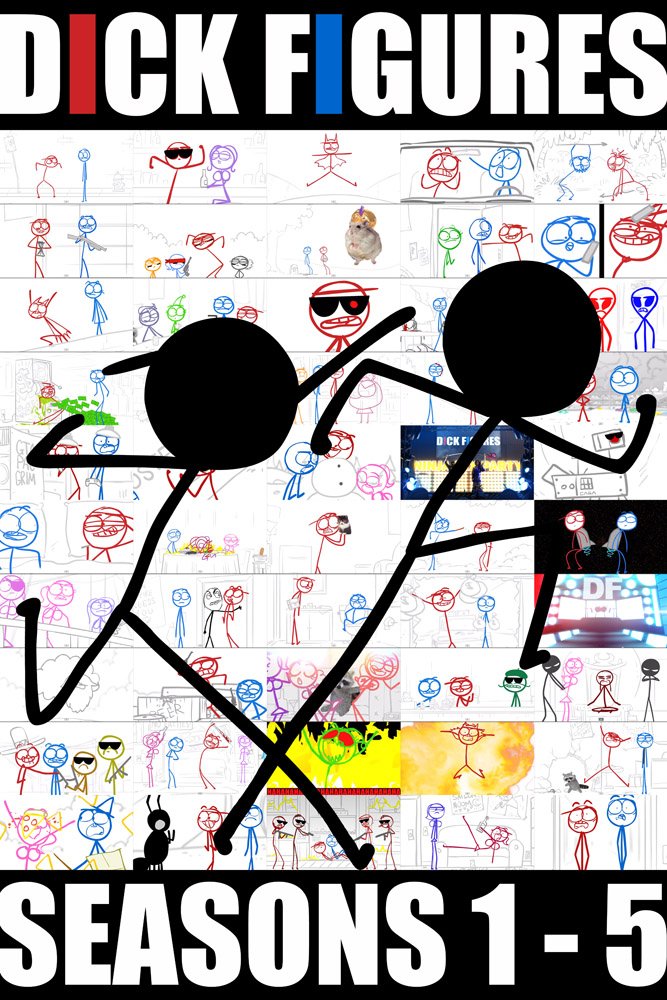
Dick Figures The Movie – Shea Logsdon, the voice of “Pink”
Since way back in 2010, Shea has been the voice of Pink and continues her role in the movie with numerous hilarious and heart-felt scenes. Pink is the emotional anchor of the show and perhaps the most “real” of all the characters, except that one time when she was a pirate. Not only is Shea an incredibly talented voice actress, but if you wanna hear Pink sing definitely check out her band, Lolove!
“Suexliegh” Receives Honorable Mention
My novel, The Success of Suexliegh, received an Honorable Mention from the San Francisco Book Festival in the General Fiction category. Congratulations to the winner, John Irving, and all the other entrants, honorable mentions, runners-up and winners as well. Quite an honor indeed to be listed amongst such talented writers and wonderful books.
Writing a Novel – Edit Like A Reader
Authors often become so myopic when writing that they miss glaring issues right in front of them. Granted, these are usually caught later by outside observers and beta-readers, but it’s helpful to cultivate the skills to work in such a way that you catch problems first. When writing my new novel, Penwell, I developed a two-phase method of editing that successfully allowed me to self-edit on both the micro and macro level.
Edit Like A Writer
This is the part of the process that all writers are familiar with. Putting words down on the page and twisting them until they play nice. A thesaurus is never far from hand. Thanks to the handy note-taking features of Scrivener, I had amassed a small army of fixes that required specific attention. At the same time I knew I needed to not only polish the prose, but overhaul each chapter to make them powerful on their own.
To do this I revised chapters individually in reverse-chronological order. Instead of having a million issues fighting in my brain when re-working the book in order — where did the characters come from, where are they going, what has to happen in this chapter, how does this play into the overall character arc — I focused on the most important part of writing: making the material engaging. I treated each chapter like its own short story and fought to make every word count. Also, perceptively, it’s much easier working on something that is only 3,000 words instead of 100,000. Hugh Howey, the author of the wildly successful self-published-turned-published-turned-phenomenon Wool said, “If you’re not dying to write what happens next your readers aren’t dying to know what happens next.”
Edit Like A Reader
After all of my notes had been addressed, I felt comfortable with the structure of my story. Only then did I begin editing from the beginning. This time through, I worked quickly. Almost as quickly as if I were reading the book. To emphasize this even more I read my work on a Kindle Paperwhite, the same way many of my readers would see it. There is some strange magic to viewing your work in a final format that elevates certain problems and makes others vanish (more on that in another post). Once your words are set in stone, such as on an e-reader, PDF, or printed page, you are able to step outside yourself and view everything much more objectively.
Reading/editing at this fast pace forced me to consume the material like everyone else will. How it is supposed to be consumed. Some sentences felt too long. Others were unnecessary. As opposed to editing 1-5 pages per sitting, I was suddenly working on 10-20 which made me realize that I had used the word “walked” too often. When read in context, a chapter that I had loved on its own felt repetitive and completely ruined the pace. It had to go. That is something I never would have discovered had I been reading sentence to sentence instead of viewing it as a whole. Slow and methodical editing is important, but since the reader really just wants to know what is going to happen next it’s important to read your work like your audience will. When working in film, I don’t review my scenes in slow motion, I watch them in real-time. Musicians don’t play back their tracks at half speed. Following the same principle, I’ve found great value in editing at nearly the same pace as a reader will read.
Writing a Novel – Finishing a First Draft
“To write it, it took three months; to conceive it three minutes; to collect the data in it all my life.” – F. Scott Fitzgerald
— — — — —
Whenever I write the first draft of anything, I work by three simple rules:
1. Get the right sentiment, not the right sentence.
What often stops most writers from writing is the fear that their work is not good enough. That the verbs are weak. The characters, flat. Or, every sentences begins with “He”, “She” or “I”. Forget all about that. Seriously. Forget it. What your aim should be for your first draft is to just to say what you want to say, even if it’s not the way you want to say it. It is highly unlikely that the way you write your words the first time will be perfect and beautiful and unchangeable. Focusing on the sentiment is much easier because once the story is working you can then go back and refine on a micro-level to your heart’s content.
“Jim was in his apartment.” Okay, that’s fine, it’s good to know where Jim is. Move on. Don’t languish. Perhaps when you come back you can change it to “Jim paced around his apartment.” Action, that’s good, some questions are raised why he’s pacing. Then to: “Jim paced around the blood stain in his apartment.” Whoa, what? Tell me more…
2. You can’t work on something
until you have something to work with.
I very strongly believe in this. When you have your whole story, or sentence, or poem down you can view it in a larger context and see what you actually need. These details are invisible when you’re working word to word; you need a bird’s eye view. You also need actual content to work on. Until you write it… there’s nothing to improve. The simple sentences you thought you wanted to flower up with description might flow just fine. Then again, maybe you do need a new way to say “suddenly.” When you’re working on a first draft you’re down in the trenches taking gunfire from all directions and really can’t think straight. However, once the story is all put together, you can view it as a whole work and act much more like a reader than a writer to figure out what truly needs to be changed.
Why this works for me is that although re-writing a novel is a lot of work, writing the first draft is infinitely harder. Part of that is mental. “It’s taking forever to write this book, I’ll never finish it,” you say to yourself, but once it is finished that changes to “Well, it’s written, now I just need to re-write it!” Somehow, that is far less daunting because, hey, you’ve written a whole book. You’re a novelist now.
3. No matter how well you write a first draft,
it will always be just a first draft.
First drafts are shitty. If your first draft is not shitty, you are not human. My first drafts hardly read like a book at all. Instead, they feel much more like a script: lots of dialogue and descriptive action, not much depth of prose. I do this because I know the first draft is going to be terrible but due to points 1 and 2 when I come back later I can make it better. There is some strange magic in knowing that what you’re writing is not what you want it to be. I find it freeing. Remember, it’s not your final draft. It’s just a first attempt. Who ever does anything right the first time? Except those aforementioned inhumans. The first draft is about finding your story. Building it. Following the twists and turns. You will write bad sentences. There will be clichés. That is totally normal. This early draft is just the skeleton onto which you will grow muscles, skin and a full head of shiny hair (and better analogies).
So, dare mighty things and finish that first draft.
Dick Figures The Movie – Animating The Raccoon
When asked what was special about animating the Raccoon, animator John Dusenberry replied, “The Raccoon has the most limited movements of all the characters, no fingers or elbows, no head turns or even eyeblinks, just a flapping mouth and cut-out shapes like an old Terry Gilliam cartoon, yet he’s one of the most beloved characters in the series. Or something.”